|
Timekeeping History
Instruments to tell the time
first evolved in Egypt as early as 5500BC in the form of sundials. Next
came water clocks, letting water at a regulated rate through small
holes into a bowl until it sank. Water clocks (clepsydra) were refined
over time to become more accurate with pointers and floats. Then came
hourglasses, which when upended, allowed grains of sand to fall through
into the other chamber at a regulated rate. Candle clocks and incense
sticks were also used to measure the time through burning at a regular
rate.
Mechanical clocks
were first crafted between the 11th and 13th
Century in Europe. They consisted of gears and wheels which were turned
by weights attached to them. A single hour hand
marked the hours. These clocks became popular in churches and monasteries
and would tell when to toll the bells for regular prayers or church
attendance.
 |
 |
 |
 |
|
St Michael's Church
Jena
Germany |
Le Gros Horloge
Rouen
France |
St. Vitus Cathedral
Prague
Czech Republic |
St. Michael's Church Coningsby, Lincs
UK |
As
technology further developed, the clocks became smaller. In due course
they became small enough to put on a wall or mantelpiece and would
eventually became small enough to be portable.
The
evolution of the Pocket Watch.
Spring-driven clocks were
invented in Italy in the late 1400s. Building on this pioneering
technology, Peter Henlein (1480 - 1542), a locksmith from Nuremberg,
Germany, created the first pocket watch in 1524. Henlein's watches, had only a single hour hand. Minute hands would not appear on
watches until 1675, when the invention of the balance spring by Dutchman
Christian Huygens, meant that clocks and pocket watches would be
accurate enough to add a minute hand.
 |
 |
 |
 |
 |
|
Germany
Circa 1500 |
Germany
Circa 1590 |
Germany
Circa
1560 |
Belgium
Circa 1600 |
France
1810 |
Modern Day
Single Hand Timepieces
Influenced
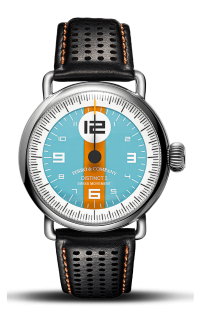
by early watch design, several watch manufacturers have crafted a single
hand watch suitable for modern day wear. The first modern day single hand watch
- the Uno, was first produced by Klaus Botta, of Botta Design in 1985.
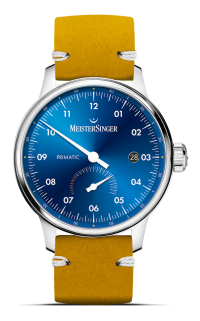
Other single hand wristwatches are also now produced by MeisterSinger, Jorg Schauer and Karl Falk among
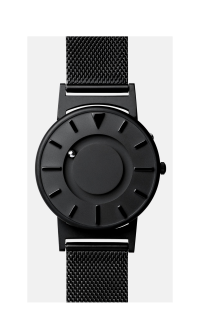
others. There are also variations upon the single hand watch, such as
the ball-bearing Abacus watch denoting the time based upon the same
theory, but through a ball-bearing and magnet.
 |
 |
 |
 |
|
Botta Design |
MeisterSinger |
Karl Falk |
Abacus |
These Single Hand watches
and more are available for online purchase from
the watch
shop: www.unusualwatches.co.uk
|